SomaSensationStudio

Embodiment as empowerment,
movement as medicine.

Soma

In Greek, soma means body, specifically, body in "wholeness".

Sensation

A language in which we understand our surroundings, what we like, what we don't like, how we make meaning in the world and with our bodies.

Studio

A space of practice that may take a physical or nonphysical form. A place to experiment, to be creative and expressive, to explore realms of possibility through sensation.

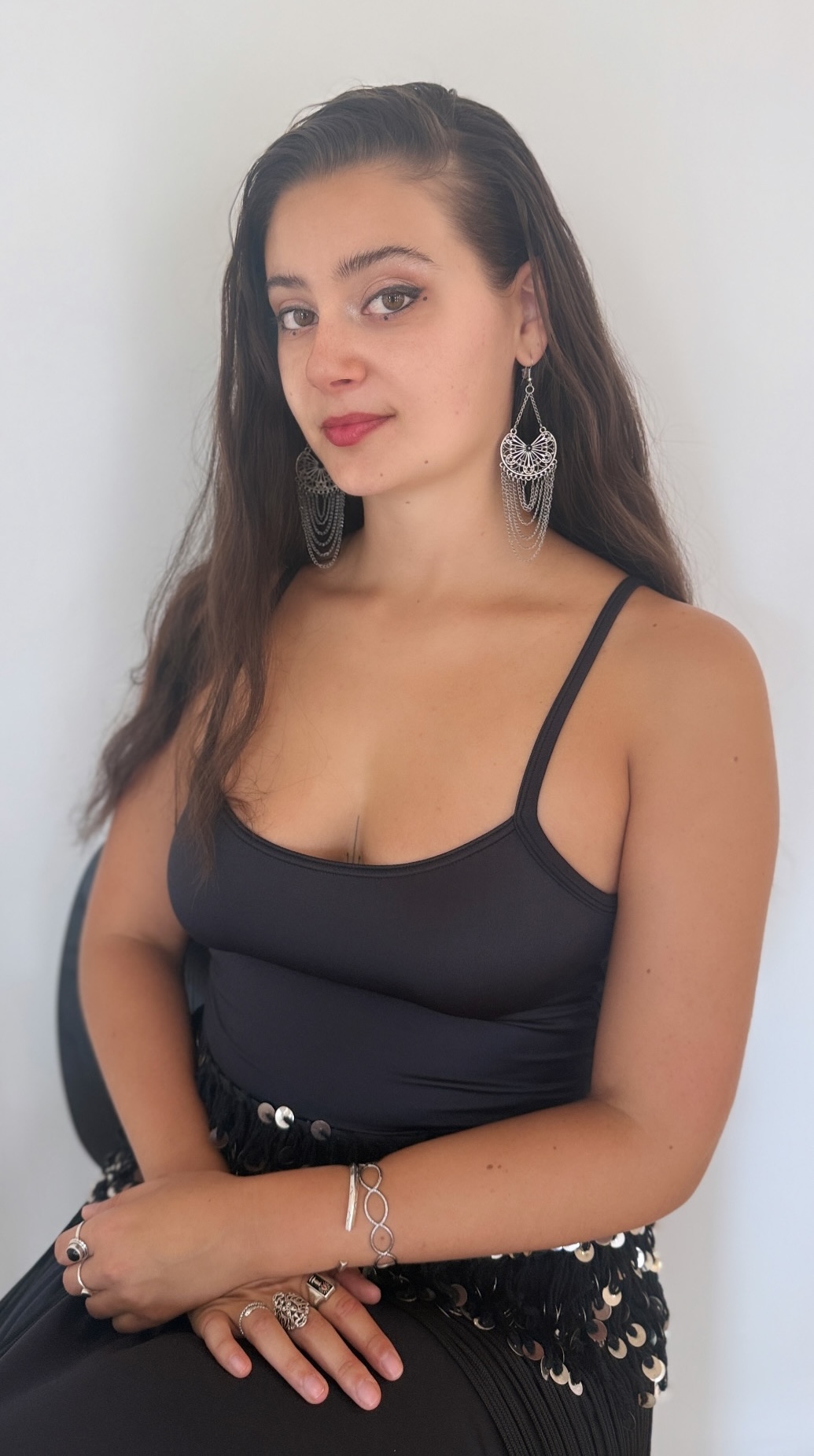
Avika Talmor

Certified Eco-Somatic Practitioner

Avika (she/her) was born and raised, and currently lives on the lands of the Lenape also known as Brooklyn, NY. She facilitates group workshops, creates somatic education curriculums, and sees clients 1:1 as an eco-somatic practitioner. She does this while balancing multiple jobs as a program coordinator for NYC community gardens, restaurant worker, and multi-hyphenate artist.

Avika intends to weave her many passions of dancing, dance ethnography, environmental justice, storytelling, archiving memory, and event coordination together. Her practice shape is defined by her training and education in various somatic schools of practice and leans on the inspirational work of Dr. Martha Eddy, Staci K. Haines, Bonnie Bainbridge Cohen, Nkem Ndefo, and Suhaila Salimpour.

Certifications
  • Dynamic Embodiment® student under Dr. Martha Eddy certified Body/Mind Dance Teacher (2025-present)
  • Strozzi Institute in Embodied Leadership (2025)
  • Politics of Trauma course by Staci K. Haines certificate of completion (2025)
  • Advanced training in Ecotherapy and Natural Healing Practices from the Pacifica Graduate Institute, certification of completion (2024)
  • Integrative Somatic Trauma Therapy from The Embody Lab, certification of completion (2024)
  • Bachelor’s in Global Humanities and Critical Thought from the last graduating class at Mills College
Avika Talmor

Why is working with our body‑mind connection important?

Through accessing our sensations, we become aware of our power. We become capable of figuring out what feels good versus what does not feel good. Feeling the connection between our physical, our mental, and our emotional systems allows us to make decisions in a more intentional way. We are literally tapping into our sense of autonomy when we move from a body that is aware. We are under multiple, intersecting systems of domination that are constantly telling us to work harder, move faster, think better. As a result, the pace and play in our bodies, where our imagination and desires reside, are often forgotten in the ruckus of capitalism.

What would happen if we gave power back to our bodies? What would happen if we remembered all that we can do with our aliveness? How will we move from a place of aliveness that celebrates what we love to do?

Modes of Practice

Group workshops

Somatic education, in community.

Eventbrite link soonSee workshops →

Curriculums

Curriculums to purchase.

Store link soonVisit the store →

How I approach a session

As an eco-somatic practitioner, I do not adhere to state guidelines of psychotherapy or other state issued counseling regulations. Therefore, my practice is designed to adapt to the person I am working with. I honor the many ways people like (or don't like) to be in relation to time, space, place, their body, and other people's bodies. I work with you 1:1 to develop your own somatic practice shape.

As a result of working for myself, under few state or city guidelines, I create my own terms. If interested in a 1:1 session with me, we will discuss what needs you have for the space you want. In our initial conversation during our virtual consultation, we can create a loose plan based on your capacities and intentions if you choose to work with me as a client.

What I bring to the session

Somatic practices
  • Somatic movement techniques and knowledge that are inspired by Dr. Martha Eddy, Irmgard Bartenieff, Bonnie Bainbridge Cohen, Staci K. Haines, Nkem Ndefo, Erika Lyla, Suhaila Salimpour, the Strozzi Institute. This includes information about the anatomical bodily systems.
  • Knowledge of somatic theories and practices in resilience, embodiment, boundary setting, empowerment of voice/any body part, and reconnection to holistic self (where body, mind, heart, and spirit are connected).
  • Pelvis and hips devotion.
  • Guided meditations, centering, slowing down, and unfolding.
  • Integration techniques: how to incorporate somatic practices in your day to day.
Creative activations
  • Dance training in different forms of what the West calls "belly dance", from Turkish and Greek Tsifteteli/Çiftetelli to Egyptian dance forms Raqs Sharqi and Baladi.
  • Experience in improvisational theater, storytelling, and movement with various creative groups in NYC.
  • Guided and improv stream of consciousness practices through poetry, visual arts, and crafting.
Connection to the natural world
  • methods Practice and knowledge of earth based healing practices from ancestral lands around the Mediterranean, the Balkans, and Northern Europe.
  • Exploration of diasporic feelings, of disconnection, third culture/space experiences, and re-membering our body's relationship to "home".
  • Over 5 years of working on farms across the US/Turtle Island, in community gardens in NYC, and in environmental and food justice.
  • Consent, respect, and acknowledgment with the lands we're on.
Value systems
  • The realm of somatics is not new. Cultures across the world have been teaching and practicing body mindfulness and movement healing for centuries. Your ancestral movement practices, and inherent bodily desires to move are encouraged.
  • Setting healthy boundaries with each other is respecting ourselves.
  • As a queer, femme practitioner, the work we do is always honoring queerness as a practice and way of life.
  • Sensitivity. When we allow time to feel into our bodies, hard emotions may arise. There is always room for "no", "I want to stop", "can we take a break", "I'm not ready". We go at your pace, always.
  • Curiosity and openness. Self exploration begins in the unknown.

Creating space together

We will work together to build a meeting schedule that fits for both of us. Examples of this are:

  • We meet twice a month for 30 minutes online and once a month in person at a space of your choice (park, cafe, dance studio), every other month.
  • We meet twice a month at a dance studio in the fall/spring, with a break in the summer/winter.
  • We meet 30 minutes online every week for 6 months.

The schedule we create is to accommodate both our schedules and work with time in a way that feels good to you. The goals and intentions you want to work with during our sessions will help guide the structure of our meetings.